Showing posts with label writing. Show all posts

Monday, 28 July 2014

Book Review: Assail by Ian C Esslemont

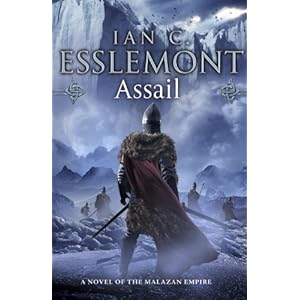
Look at it! It's so awesome!


Hopefully I was not alone in my giddy excitement when I saw the title of this book.

Assail.

All Malazan fans will know the weight that sits on that continent. Throughout Erikson’s series we have seen some of the toughest characters be chewed up and spat out by Assail. And sometimes they even survive.

We enter the world of Malazan once again as we always do, with some new characters and some old faces, and I think by now with 15 books under most readers’ belts (I’m going to assume that you’ve read Esslemont’s series after you read Erikson’s) we have enough context that we are immediately drawn into the new stories. A young man from one of the tribes on Assail and a sea-captain on his way to the fabled continent are a couple.

Esslemont does a wonderful job of building tension and suspense in the first portion of the book. We are only given fleeting glimpses into what lies at the heart of the continent and what terrible things might happen. Further to this we are thrown a complete curve-ball with the prologue and only left with burning questions.

Esslemont builds on this consistently throughout the entire book and we are given hints, both great and small, about what is happening and important revelations about the world. I could barely put the book down in the first half for all of these hints and questions (I almost missed my stop a couple of times on the train) and then by the time the second half of the book comes around you’re caught up with the momentous plot you can’t put it down then either!

I will say that for some reason around Chapter Six there was this weird explosion of adverbs. As though Esslemont realised that adverbs can be okay sometimes and got a little carried away. It was a little off-putting once I realised he wasn’t doing it deliberately with one character to try and make a statement about their POV, but then after that chapter it dies down and all is well with the world.

Apart from the ‘Adverb Attack of Ch. 6’ Esslemont’s language is diverse and descriptive, and I did note at times how wonderfully creepy he could be (in all the right places). Esslemont’s voice really shines and I think that he has developed wonderfully since ‘The Night of Knives’ way back in 2004. He gives the proper weight and sadness to those characters and scenes that need it but is also a dab hand at cracking jokes. There was a wonderful moment in a climactic fight scene towards the end that did give me a mighty chuckle.

The Epilogue does a wonderful job of tying everything together in a neat little bow. I did wonder whether it was necessary and should have been a final chapter, but perhaps that’s just pedantic of me? Regardless, the Epilogue ties all of the threads of this book together and then shows us some of the paths the characters want to take next. So instead of leaving us with the unanswered questions that we were sometimes left with in Erikson’s work, Esslemont ties everything together and then scatters the seeds for the next round of storytelling. And each and every single one of those seeds should be an epic story in its own right.

By the time we reach the end of the book the world has been suitably threatened, our view on it has been suitably rocked, and we have had our hearts suitably broken. All in all, Esslemont continues to build and improve on his previous work. Every volume increases in complexity, skill, and epic scale.

I absolutely urge any fantasy fan to read the Malazan series, and if any Malazan fans are hesitant to pick up Esslemont’s series after what a good job Erikson did, I can assure you that you will not be disappointed. Esslemont has at least 3 more books to go and I for one cannot wait to read them. 


Assail is released on the 14th August and you can preorder it in hardback or ebook from Amazon, or from the publisher's website.
Continue Reading...

Monday, 28 April 2014

Iron Druid Chronicles; Impressions

This week I want to talk about the Iron Druid Chronicles, which tell the story of Atticus O'Sullivan. I won't be giving a review of a specific book because I've been getting through the audiobooks and am already on the fourth book in the series (of a current six with the seventh to be released later this year).

Atticus is a 2,000 year old Druid, was born in Ireland, and now resides in Arizona in the USA.

The Iron Druid Chronicles is a nice urban fantasy that strays away from the somewhat common underdog trope. Sure, we all love an underdog, who doesn't? But sometimes it's nice to do some reading where the main character knows they can probably handle themselves, steps up to the plate, and knocks it right out of the park.

Sometimes, that's what Atticus does. Right in the opening of the first book we see him get attacked by fairies (vicious, murderous nobleman type fairies) and he beats them handily them summons something to eat them.

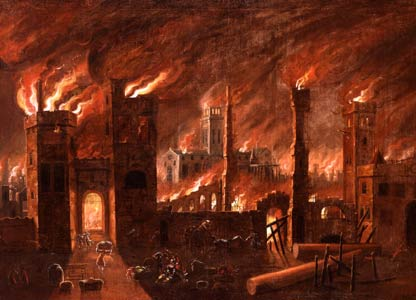
Suffer that woundikins you fairy scoundrel! 
Full disclosure, in my head I do end up comparing the Iron Druid Chronicles and the Dresden Files in my head quite a lot. I think they have a lot of similarities but also deliver differently on a lot of different things.

The underdog example being a prominent one, that's one of the reasons I liked the Dresden Files. Harry Dresden is usually, if not always, on the back foot and you really feel like the story is dragging him kicking and screaming through the mud. But Harry Dresden never gives up, and neither does Atticus O'Sullivan.

On the flip side, the Iron Druid Chronicles you get the impression that Atticus is over his head but in the same way that I can't breathe if I stand at the bottom of a swimming pool, but I can swim. I can breathe just fine if I use my noggin' and actually start swimming.

It's almost unfortunate that this relieves a lot of tension from the story, even when you're thrown into climactic battles at the end of the books. Atticus just isn't in trouble like we're used to. The books are still very enjoyable, I don't want to detract from that, but perhaps they could be executed a bit better.

The characters in the Iron Druid Chronicles are colourful, varied, and have their own goals and ambitions. One of the things I do love about this series is that it pulls on a mythology that gets less of a look in than the standard European medieval fantasy.

What with Atticus being 2,000 years old he's old school. Literally. He's an old Irish druid and he has connections. He personally knows a lot of gods and most of them hail from the Emerald Isle B.C.E.. And I think that's pretty darn cool.

(Sidenote - anyone want to suggest other fantasy that's based on Celtic mythology or Ireland? Artemis Fowl not withstanding. I am game for some more of that)

So along with seeing some pretty smart destruction of dangerous faeries very quickly we also see the wonderful entrance of the Celtic goddess of battle, Morrigan, also make a swift appearance. And this is the flip side of being a top dog, It's a pleasant change from the constant uphill battle, it's more of a 'tread carefully lest ye be throttled by a god' kind of battle.

Speaking of dogs and battle, what good is an age old druid if he doesn't have some sort of warhound? No good, that's who.

But never fear, we have Oberon, the Irish wolfhound (come on now, was it really going to be anything else?). Oberon is the comic relief, he has all the typical sensibilities and attention span that you would expect of a dog and comes across as lovable and playful scamp. There are some  flaws with Oberon, I think, though. For example, if there's a huge Irish wolfhound as the animal familiar of a kick-ass, 2,000 year old druid, I want to see him wreck the place up. You do occasionally see him helping out in some battles, but not being the avatar of doggy death and destruction that you would hope he would be.

Okay with all that I think I've rambled on at you enough for now!

To summarise; the Iron Druid Chronicles are quite an entertaining series but with a few flaws. Sometimes you get the feeling it tries too hard to make you laugh. I think this is probably a lot easier to deal with in the books where you can skim over bits, but when you're listening to the audiobook you're forced to hear every line of Atticus trying to speak as a lolcat to a vampire, and man is that awkward.

But the flaws shouldn't stop you. It is a lot of fun and it's nice to dive straight into the, pretty much non-stop, action. The world is interesting and the characters are fun. And even though there are a couple of bits that I found awkward, which were few and far between to be fair, I also found that I went through the first few books like nobody's business and that is always a very good sign. So definitely check it out if you enjoy urban fantasy
Continue Reading...

Monday, 14 April 2014

Lost Words - How to insult, describe and perplex with words from 17th century and beyond!


I was planning on writing a post about when is the right time to call it a day with a book you're not enjoying. And I was doing well writing that.

But then I found this website.

Here we have another list similar to the one that I've shown you before with the Dictionary of the Vulgar Tongue.

Only this time the words have been forgotten and aren't necessarily insults (but you and I both know they're going to be used as such)! So, ladies and gentleman, for your delight and delectation I present to you some of my favourite words from my perusal. Full with their definitions of course!


Squiriferious
Having the character or qualities of a squire

Why yes I did imagine a squiriferious squirrel when I read that word, and you should too!

One day the squiriferious Reginald hoped to be Sir Reginald the Nutty

Namelings
Persons sharing the same name

Foppotee
Simpleton

A simple word with a simple definition, for a simple person.

Sagittipotent
Having great ability in archery

I like that word. Sagittipotent. Similarly, sagittiferous means bearing arrows.

Uglyography
Bad handwriting, poor spelling
I'm sure I'm not the only one surprised by that definition. If I said I was a practitioner of the undesirable art of uglyography I'm sure people would make some pretty hasty assumptions.

Kexy
Dry, brittle, withered
Perhaps kexy is the opposite of sexy, then?

Medioxumate
of gods of intermediate rank between heaven and hell
I would not have thought a word would exist for such a thing. So terribly and wonderfully specific that I had to include it here.

Ascoliasm
boys' game of beating each other with gloves or leather while hopping

Again, so delightfully specific it had to be included. I can only assume that this game is akin to some sort of bloody hopscotch gauntlet.
Step between the chalk lines of death. If you dare!
Oporopolist
Fruit-Seller

Now that sounds  a lot more regal than saying you have a stall down the market, don't you think? "Me? Why I, sir, am an oporopolist." (Cue monocle)

Woundikins
diminutive form of 'wounds'; mild oath

This tickled me greatly, and I shall most definitely be trying to say 'woundikins' when I am mildly shocked, injured or elsewise surprised in future. 

So there are some words to get you started on making your speaking, writing, or sandwich boards more archaic and hilarious. Hopefully this sort of segment will become fairly regular with other strange and wonderful words that have either faded out or are just plain obscure.

Until next time! Happy hunting!
Continue Reading...

Thursday, 3 April 2014

And Now For Something Completely Different! A Real Tale From History

I love me some history, I love it so much that I studied various kinds of history for pretty much my whole education. I grabbed 2 degrees in Classics and Ancient History (they were mine I promise, I didn't steal them).

One of the things I love about it is all the stories that you could make from it. Maybe one day I'll give it a go! But for now, I shall just tell you about one of my favourite episodes from Ancient History! Maybe you could make it into a story, or at the very least I hope it interests you.

Now we all know that people can make hasty decisions when their blood is up. You're excited, angry or sad so maybe you're not making the best choices?

There is an episode from ancient Athens that sums this up pretty perfectly.

At the time (427BCE) Athens' power sprawled across the ancient world and across the oceans. There was a large hegemony of city states that bowed to the Athenian's power, called The Delian League. Athens had a large amount of territory, but even father was their territory they controlled via their tributaries. Of course a lot of people weren't happy about being forced to pay Athens a variety of tithes and there are several episodes of city-states trying to secede.


In 427BCE one of the states that tried to do so was called Mytilene. The city was on the other side of the Aegean to Athens, and were very unhappy with the Athenians. They even sent an envoy to Olympia to seek help against the Athenians with their revolt, saying that the Athenians had abused their power with the Delian League. Maybe that's true, or maybe the oligarchy that rules Mytilene wanted to unite the power of their island of Lesbos, something the Athenians would never allow.

So one thing led to another and they revolted. Sorted.

But, alas! Someone tipped off the Athenians (one of the other powers on Lesbos, and some internal dissenters) and war broke out. That's all well and good of course, except that Mytilene nor their allies were ready for it, and got their arses handed to them. That led to their negotiating terms which was essentially them surrendering.

The Athenians allowed the Mytilenians to send an envoy to Athens and plead for compassion. The envoy was summarily executed on his arrival at Athens and the Athenians began a debate to decide what to do with all the rebels.

Now, the Athenian Assembly consisted of every Athenian citizen (and here follows one of the dangers of a direct democracy) and so they could all vote on what to do next. The Athenians were scared of further revolt and enraged by this thought out plan to thwart their power. After all more than one of the city states on Lesbos has risen against them and had orchestrated an attack on Attica to help them out (them being the Mytilenians that is, it didn't help the Athenians).

So the Athenians decide that the best defence against further revolt is a good offense. Of course that means slaughtering all the men and selling the women and children into slavery. Huzzah!

And there goes the Trireme to carry it all out. Not a bad day's work, eh fellow Athenians? Phew, time to hit the sack!

The next day, they realised that maybe they'd been a bit harsh. I mean, did they really need to kill everyone? Maybe not. Another debate ensued. Whereas before every single Athenian had been in favour of utter annihilation, now even the most bloodthirsty from the day before were hesitant. This led to a narrow margin in favour of not killing everything.

Another trireme was sent out, with double the normal crew, to catch up with the first. Luckily for the Mytilenians both triremes arrived at about the same time and in what I'm sure was a crazily intense scene, the old orders were overruled.

So instead of death and destruction for anyone and everyone, they merely razed the walls, replaced the oligarchy and divied up the land of Lesbos.

Yay, democracy!
This episode I think clearly outlines the dangers of being too loose and easy with your pent up emotions. And just imagine what would have happened if the second ship hadn't reached them in time! Could it have led to a revolt that spanned the Aegean? Does it send the Athenian people into a spiraling miasma of depression and despair?

I hope you enjoyed this little segment, maybe it'll spark some ideas, maybe you just found it interesting. I hope both, and more!

More to be coming soon!
Continue Reading...

Tuesday, 5 November 2013

My Very Quick Write Up of the WFC2013

Well then, it’s time for a write up of the World Fantasy Convention.

I think it’s important to note at this point that this was my first convention, world or otherwise, that is specifically centred around fantasy, and definitely my first coming at it with a professional interest in the industry and genre.

So I’m not really sure what I was expecting but boy howdy was I not disappointed!

It was a fantastic weekend (and I’m sure I bored my family when I got home with tales of panels and meeting new people), the panels were interesting, everyone was friendly and there was some really great other events on too. All of the publisher’s parties were great fun and it was just astounding to be in the same room with so many important and fantastic people! I won’t lie to you there was some slight hyperventilation to start with (hmm, perhaps from this point forward I’ll try to sound less like a fan-girl).

I feel like there’s almost too much to talk about! And regretfully I didn’t take any pictures (a couple of Patrick Rothfuss’ reading but they’re super blurry, I blame the impressiveness of his beard), well apart from all the books that had to be hauled homeward!

The panels were all very interesting, ranging from whether women can write legitimate martial fantasy (spoiler alert: they definitely can), how to follow up writing with that pesky second book, world building, short story writing and everything in between! So I’ve come out of the convention with loads of ideas and there was even a panel on editing and putting together a short story anthology (so keep your eyes peeled for some news like that next year...), and what it’s like being a small independent press.

The art dealers room I found very cool, especially as I seem to have an unusual fascination and love of how books are designed and the end product. So there was much snooping around the artist room to see what cover art there was an even some snooping with covers for something I’m now thinking about (see above bracketed hints).

That’s also one of the reasons that I’m so excited with the Bragelonne sample book with translated excerpts of some of their fantasy works. I always find that the French edition covers that I’ve found to be some of the most exquisite of those on the market and really bring elements of the story to life before you’ve even picked up the book.

In a lot of ways, for me, it was an eye-opener for some unsung aspects of the publishing industry, like the short stories, the anthology editors and the agents. I’ve come into contact with some of these in my short time in the publishing industry but it was also really nice to see them explored in such an accessible and excellent manner.

Everyone was really friendly and it was quite a quest if you wanted to find someone that wasn’t smiling (not that I did, mind you)!

On a personal  note I was thoroughly ecstatic to see Mr Patrick Rothfuss do a reading ( I’m going again to the Forbidden Planet one in London) and it was a phenomenal reading. Mr Rothfuss said he wasn’t sure if it worked well if it was read out, but I think my goosebumps can attest that it works just fine!

And listening to the authors and the panels on various aspects of writing really helps you appreciate so much more the dedication, effort and skill that goes into a truly wonderful piece of writing.

So that’s all I’ve got to say on the subject for now, no doubt I shall think of more later on and curse myself for not telling you about it! But, thank you for stopping by everyone, and I’m sure you can tell that from all the exclamation marks how excited I was/am by the convention!

Good hunting!
Continue Reading...

Thursday, 19 September 2013

Coming Up Next!

Good day wordsmiths!

(I think it would be wordsmiths, I toyed with the idea of pensmiths but we don’t make pens, we make stories... so storysmith, but then what about poems and novels and epics? So words it is!)

Welcome back to another fine edition of the Tempered Pen! We’ve been away a little bit (holidays and scheduling be damned!) but we’re back with a vengeance and with a bit of a mixed up format. Instead of doing an article or review every week we’re going to be posting an article or review one week and the next a story will be posted.

The stories will be quite short and we’ll do a few series of stories, so there’ll be a few weeks worth of larger story but also various different stories going on. One reason for this is to have more time to get read books to actually review them properly rather than just from what I remember. And especially with fantasy books they can be rather lengthy!

So the good thing about this is you’ll get exciting instalments of fantastical tales as well as informative and entertaining articles and reviews! Huzzah!

But that wouldn’t do on its own for a blog post, so keep your eyes peeled for another one coming extraordinarily soon!

What I can do for now is give you a sneaky peek at some of the stories that will be coming your way.

First off we’ve got the epic journey of Seňor Bloodwhiskers! The bandit cat seeking revenge upon those who wronged him the past. Along the way he’ll meet other colourful characters, grueling opponents and hopefully find the vigilante justice he’s looking for.

And the other stories that will be working their way to you will be the colourful tale of Arthur Sullivan, his apprentice and his shop the Sullivan Emporium. Arthur is a purveyor of dreams, wishes and potions. Along with his apprentice Jeremy the story will follow them as they find new ingredients to make their wares from across the world.

So keep an eye out and soon enough there shall be a wonderful story for you to enjoy!

Good hunting!
Continue Reading...

Sunday, 8 September 2013

3 Reasons You Should Be Writing Short Stories

One of the main mantras for writers, whether they’re hopefully, published, or old hats (not literally. Although I would definitely buy a book by an old hat, if just for the experience) is: Write, write, write, write. And then when you feel like your pen can go no further, write some more. So I won’t be going over this rule too much. There it is. You see it. It has been proclaimed.

So what is today going to be devoted to. Well, I’m going to give you (arbitrary number alert) five reasons you should be writing short stories. I don’t care if you’re writing a huge, ten-book, epic fantasy series. I don’t care if you’re just letting your newly finished manuscript settle before you go back for some editing. You should be writing short stories.

Okay that sounds quite draconian. But writing short stories is good for the literary muscles, there’s a host of reasons that short stories can help all of your writing from sprawling epic series to your opening line. I know you’re just aching to see the list, so let’s get to it.


1: YOU GET A BREAK WITHOUT LOSING YOUR EDGE

You’ve been penning your sprawling space opera series for 5 years now. You’re almost at the last chapter and then you’ll be done! Ready to throw it out there for all the publishers and agents to fight over. Maybe you’ve just finished the first draft of your very first book, and you’re super excited to get it out there!
Well it would be a good idea for you to write short stories for a bit. That way you still get to work on your craft (so you’ll just keep getting better) but then you can come back to your big work with a fresh perspective. I’m not saying that you won’t be able to effectively keep working on it, but you’ve heard of being too close to the problem to see the solution? Working on a piece of writing for a long time can be like that. You might not have any problems with your writing, and that’s great! But it would definitely be worth taking a month off to come back fresh to double check. And then if you write short stories you still get to do what you love and it’s still a break! Huzzah!

2: IF YOU CAN’T WAIT TO GET SOMETHING OUT THERE SHORT STORIES ARE THE WAY TO GO

Patience is a virtue, especially in the business of scribbling, re-scribbling and then making once more sweep of edits. But sometimes patience isn’t what you want, or heck even what you need sometimes! It’s nice to have something to actually show for all your hard work, beyond just saying to people “I write.” and getting a look that says ‘suuuure you do.’ Short stories mean that you have something you can show to people, it’ll take a lot less time to get to a professional level (thinking purely from the perspective of how many words you have to shine!). You could also potentially get together with some fellow authors and make an anthology! Of course this will still have all the normal effort of publishing a book but if you just can’t wait until your major project is finished then this can be a good way to have your name on the internet with a product in tow!

3: IF YOU’RE A SECRETIVE SALLY IT’S SOMETHING FOR PEOPLE TO CRITIQUE

If you’re someone who doesn’t like showing people your big work because you’re afraid that they’ll steal your idea, I have two things to say to you. It’s  super super super unlikely, and short stories.

It’s going to be much harder for someone to take your idea for a story with a chapter or two that you’ve given them to look at and then for them to take that idea (that they won’t have the whole picture of anyway) and then write that book. I mean, you’re already asking people to look at it, you’re (comparatively) almost done!

But if that’s something you feel that you want to be worried about, then look no further than short stories!


I think that these are all some pretty awesome reasons to give short stories a try! You can get your name out there, get some good feedback on your writing, not only as general prose but also how you tie a story together, and you don’t have to give away anything from your big work (you could even tantalise people by setting the short stories in the same place or be a prequel to your characters big story!).
Continue Reading...

Tuesday, 20 August 2013

How To Make the Best Swears for Your Book

So I know that the blog has been quite review heavy recently, so I thought it was time to mix it up and write an article that wasn’t about a specific book. But what does that leave me with? Well, quite a lot. So I sat and thought about what to write, and I settled on something to help make your world more thorough and real. Now this may not apply to everyone, so I apologise in advance if this isn’t for you. But, hopefully we can all learn something along the way!


World building. Love it or hate it, it’s definitely an important step for most science fiction and fantasy writers. You need to make sure you know how your world fits together, how all the elements work and what its limitations are. Maybe you don’t like worldbuilding and you’re a writer that just dives in and discovers things along the way, and that’s cool too. (Some people may even be very envious of you!) But I think most people like to at least have some sort of plan before we go ploughing off into the relative unknown of our stories.


Now, there’s load of aspects on world building, and the scope of it can range between genres and stories. Of course on how much you is dependent on you as the author, but if you’re writing a fantasy novel set in your version of a paleolithic Japan then there won’t be much point in mapping out the whole solar system!


Anyway, that’s not the aspect of worldbuilding I want to talk about today. Although there will be a blog post on it in the future. Today I want to talk about mythology, folklore and how that might affect phrases and colloquialism.

I think that this aspect of worldbuilding is something that can really add an extra dimension to your world and really bring your work together. They say it’s the little things, and I think they’re right (I don’t know who they are though), it’s the small things like unique swears or phrases that can really make a difference. This also means that if you’re just using phrases from the real world but you’ve taken a lot of time to build the rest of your world it can be jarring for the reader and bring them out of the experience.


Let’s take an example of how a badly inserted phrase could do this, we’ll use ‘By Jove’. And we’ll be assuming for this example that the world the characters inhabit is a completely separate world to our own. It has different continents, different gods, and magic; a fairly standard, but separate, fantasy world.


Now maybe you have a gentlemanly character and you want to keep him regal in the eyes of your readers but he’s just been surprised for whatever reason. “By Jove” would be a good way to maintain the appearance of a gentleman, if the story took place in the normal world.


But because it’s a fully fledged fantasy universe in its own right, the phrase doesn’t make sense. The phrase ‘by Jove’ essentially means ‘by God’ but is derived from the Roman god Jupiter. So if we’ve got a world where none of these gods existed then what our gentlemanly character has done is just said a random nonsense word. Hardly conduct that will keep him gentlemanly in the eyes of his peers.


So that’s one example of how a simple phrase can be jarringly out of place if you’re creating your own world. Similarly if you had a science fiction universe and someone used that phrase, if you’re using the real world as a base, how far into the future are you? Would that phrase still be used? It’s barely been a few hundred years and it’s already practically disappeared from modern use, so will it still be here in a few hundred more?


Right so that’s an example of something to look out for, there might a phrase you think nothing of putting in but it has its basis in something that you just don’t have in your universe. That said, don’t go too crazy with this, I like to think that if you’re reading a sci-fi or fantasy novel you can think of it being translated into something we can understand so I wouldn’t worry overly much.


But let’s look at an example of something you can create and hopefully give greater depth to your world.

We’re going to take the paleolithic Japan that I mentioned earlier as a random example, going through some aspects of the world we can create phrases and oaths that reflect the world the characters grew up in.


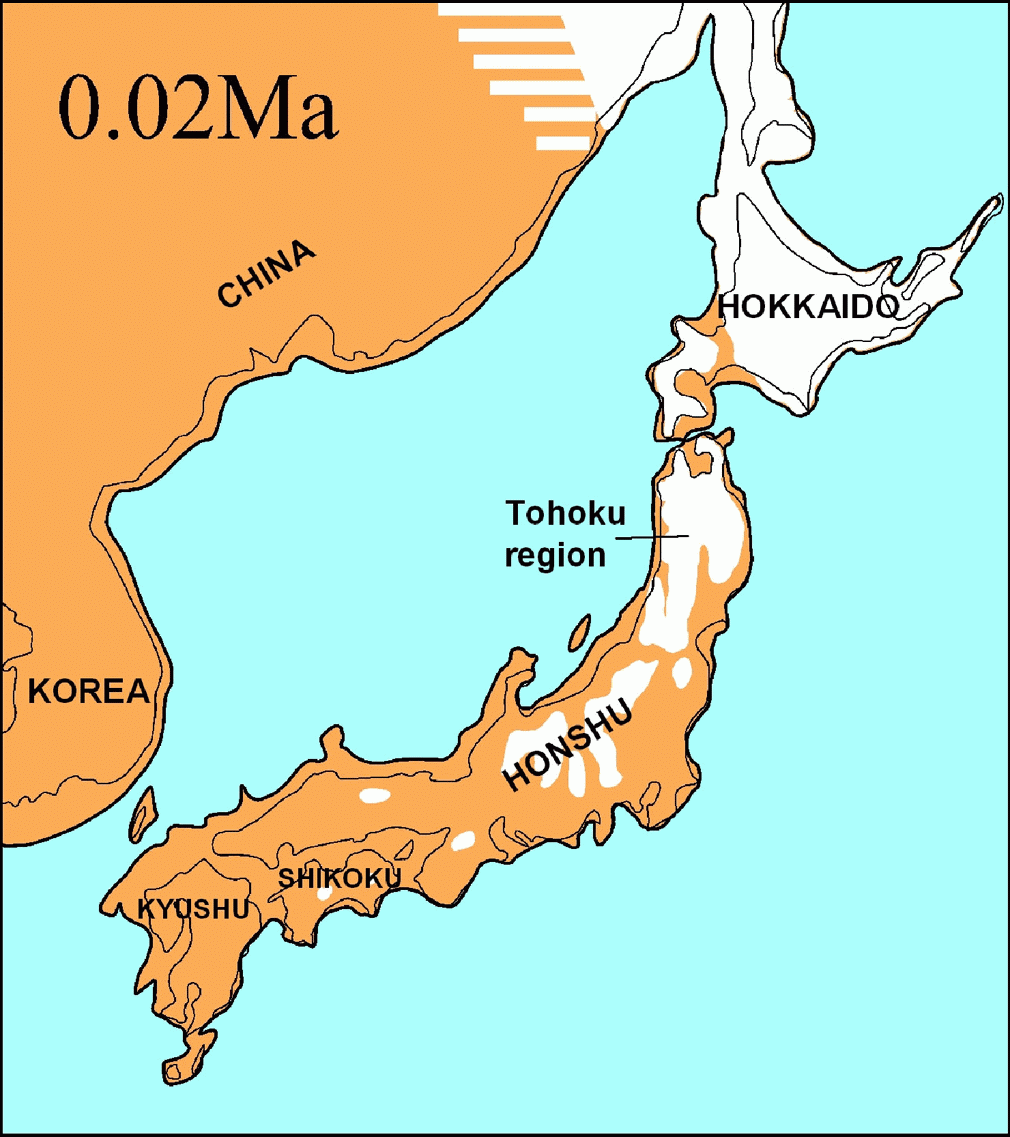
This story is going to be set at the end of the last ice age, so after a quick bit of research into the period and the area we know that Japan was connected to the mainland at this point and the general habitat would be forests and woodland for what is now Japan and tundra-like steppes for the bridge.


Paleolithic Japan, the black lines show the modern day countries


So, we have a few facts about the world our characters inhabit: There’s been a permafrost for longer than living memory; there’s deep forests in mainland; there’s wide open, almost barren, plains reaching far to the north, and they used mainly stone tools. By taking just these three facts about the world we can create a few phrases for our characters to use that will reflect the world they come from.


The permafrost can be used with regards to tenacity, stubbornness or for something that’s never going to happen, for example something like: “I’ll let you go when the ice melts!” in a similar vein to “when pigs fly.” You could use the ice and/or stone aspects for exclamations, perhaps: “Melted ice, boy! Get back here!” or “Broken stone that hurts!


These are just a couple of quick examples, but you can see how taking the aspects of the world that you have created and your characters inhabit can really add an extra dimension to your writing. It will really help to take the reader out of their world and firmly plant them into yours.


You could also use a similar technique to subtly suggest to readers that a particular character is from a different cultural background than those around him. If this strange character is using phrases and words that are strange to the people around him and alien to the setting then you can hint that the character is far travelled.


Anyway! I’m rambling now really. But hopefully from this you can see how these little touches can bring depth to your work and really hold the readers close.

I hope you’ve enjoyed this post and we shall of course be posting more in the very near future! In the meantime, good hunting!
Continue Reading...

Wednesday, 14 August 2013

Rivers of London Review

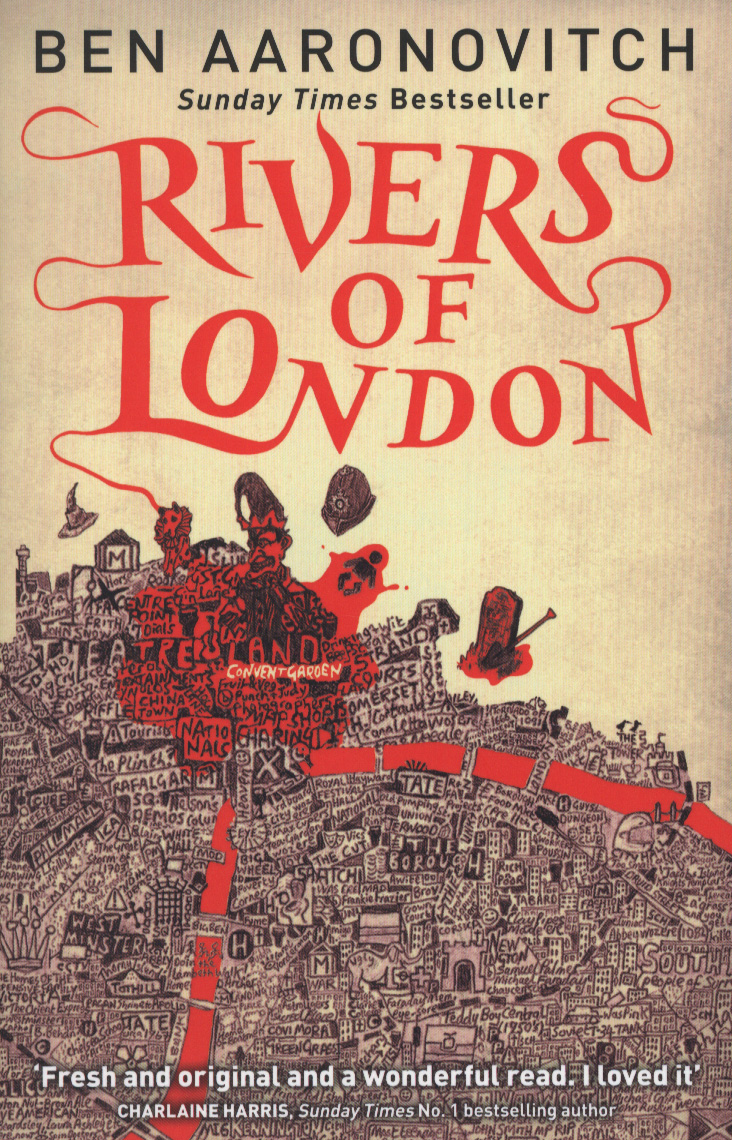
Okay, considering that I thoroughly enjoy The Dresden Files, I suppose it shouldn’t come as a shock that I enjoyed Rivers of London by Ben Aaronovitch. Another first person urban fantasy, magical detective novel, but this time set in London. For anyone reading in American it’s possible that you’ve seen it under the guise of the title: Midnight Riot. (As a side note, I personally much prefer the British cover for Rivers of London, for some reason the Midnight Riot just strikes me as the kind of cover you’d find on a children’s magic spy novel. But maybe that’s just me!)

I mean, take a look at it. It's a superb cover


The story follows Peter Grant, a probationary constable as he finishes his two year probationary period and as he deftly avoids becoming a member of the Case Progression Unit (to quote Aaronovitch “we do paperwork so real coppers don’t have to”) ends up being apprenticed to Detective Chief Inspector Thomas Nightingale, the only wizard in Britain.


I think I got an extra dimension of enjoyment out of this book because I work in London. So whenever there was mention of somewhere I recognised, have walked past, or even the tube line I got a little thrill of excitement (it’s silly I know). And also because it seems to have some nice self-deprecating humour in it, and what good British citizen doesn’t enjoy some of that?


Anyway, I know you’re here for one reason and one reason only, you dirty scoundrels, for a book review! So let’s get to it!

Firstly, I want to talk about what stood out to me for this book, and that’s the writing style. It’s a first person narrative and isn’t overly verbose, if anything it’s the opposite. Slightly jarring at first, Aaronovitch’s writing style doesn’t dwell on every little detail, it doesn’t take the reader by the hand and guide them through the story with exquisite detail and imagery. The writing style is closer to what you would get if someone were actually telling you a story. I would like to say now, this is definitely not a bad thing and very well suited to the character and the story, it just took a little getting used to.


What I mean by that is that occasionally you’ll read sentences or paragraphs that skip over a sizeable chunk of time filled with activity. In a lot of books the reader might feel that this is cheating them of the narrative, but I think that in this particular book Aaronovitch has used this technique in a rather dashing fashion. But why? Because being a police officer often isn’t fun, isn’t adventurous and is in fact rather dull. Of course I don’t want to belittle what people involved in law enforcement do in any way, but it’s just not the sort of thing you want to read about in a story. So instead of reading laborious passages in which Peter Grant, the main character, sifts through CCTV footage or logs in to computer systems or what have you, Aaronovitch just gives us what we need to know. We don’t need to know what video files he was looking at, or which folder he delved into, but we find out what he did and what he found.


As well as this, Aaronovitch scatters his writing with humour and it all comes off in a deliciously wicked way. There are definitely chuckles to be had along the way as we follow our main character through London, the underground and dealing with supernatural creatures of one sort or another. Aaronovitch, I think, manages to capture something of British humour, the kind of thing that makes you give everyone a wide, cautious berth whilst simultaneously having a sense of fierce camaraderie.


The London that we find ourselves exploring along with Peter Grant is a fascinating mix of almost forgotten London mythology along with the exciting or humdrum life of mundane London (and by mundane here I don’t mean boring, it’s definitely not boring, just not magic). But within Rivers of London we only really get a glimpse of the magical London that Aaronovitch has created. On the rounds with Nightingale, through Peter Grant’s eyes we see ghosts, trolls and other magical beings that can’t be cleanly categorised. And with Peter Grant’s feet firmly planted within both the magical and the mundane world by the end of the novel, I most certainly look forward to seeing how London transforms itself in the coming books.


Conflict is key to most stories, and Rivers of London is no different. We are thrown straight in with it as the story begins with Peter Grant as he looks after a particularly grisly crime scene when all the other coppers have left. And then almost before anything else has a chance to happen, Peter Grant is whisked away under the wing of Inspector Nightingale to embrace the strange and uphold the peace. Aaronovitch keeps the story rolling and definitely picks up the pace as the story comes to its conclusion.


Overall, I would say that Rivers of London is a thoroughly amusing and enjoyable read with a little adventure, lots of suspense and plenty of action. Although the writing style can jar a couple of times in the first few chapters it quickly and easily facilitates the story and is an apt style to portray British ambivalence in all its forms. Of course due to the first person perspective there is a lack of overt dealings with the other character’s motives, but Aaronovitch is skilled enough to throw us hints via body language and Peter Grant is clever enough to suss out how people are feeling.


You will immediately be drawn into this story as the strange and supernatural immediately jump out from the page and draw you to the next chapter. The pace is always increasing as storylines intertwine, jump free and twist and turn all over place. I would strongly recommend this book as it is a thoroughly enjoyable read with unique story and a witty approach. 

So that's it for now scribblers! I hope you enjoyed this review, and we'll be back with some more excellent content soon! I know that the blog has been review heavy of late so hopefully is the next week or two we'll be back to giving you a mix of tips, reviews and other thoughts!

In the meantime; good hunting!
Continue Reading...

Monday, 22 July 2013

How To Insult People Like An Eighteenth Century Ruffian

Hello once again dear readers!


What have I got in store for you today I hear you cry! Why, insults of course! I should probably elaborate on that point. This post is going to show you a couple of ways to make your insults authentic but still have some punch behind them. So as a bit of a warning this post has some language that’s a bit colourful.


One of the things that I think can be difficult for writers of science fiction, fantasy or anyone writing a setting that’s not the real world is the inclusion of the little details that really bring the setting to life. It’s things like cuss words, oaths muttered under your breath, or sayings uttered in confusion. These things are by no means mandatory, but they can really change your setting and characters from good to excellent.


Francis Grose, the man himself.

So I thought it would be a nice idea to take a look at some authentic slang and insults from way back when; specifically from around the 1800s. The book I’m going to be referring to is (the title as it was on the first edition that I found) Captain Francis Grose’s Classical Dictionary of the Vulgar Tongue: The Scoundrel’s Dictionary. It is essentially a dictionary of phrases, words and nicknames that were used by ‘thieves, house-breakers, street robbers and pickpockets about town’. You can find varying editions that have dates ranging from the late 1700s to the early 1800s and it’s definitely worth a look to really see how these slang terms have changed and which ones have stuck with us.


So I’ve written down a list of 15 definitions that are amongst my favourites, but this is by no means all that the dictionary has to offer. I always find it interesting, amusing or downright strange (and not always in equal measures) to give the dictionary a quick peruse. For some of the examples I’ve written a quick piece to show how you might like to use it, or at least how I might use them. So take a look at these and see if you would like to use them or even take them as inspiration for grumbles, nicknames or even a way to give one of your characters a quirky turn of phrase:

ARSY YARSEY
To fall arsy varsey, i.e. head over heels.

BABES IN THE WOOD
Criminals in the stocks, or pillory.


Earl chuckled darkly as he played with the rotten fruits in his hands, ready to throw them at the criminals in the stocks. He nudged the man standing next to him and said, “They’re strung up like babes in the wood.”


BAG OF NAILS
He squints like a bag of nails; i. e. his eyes are directed as many ways as the points of a bag of nails.

BARKING IRONS 
Pistols, from their explosion resembling the bow-wow or barking of a dog.

FUSTY LUGGS 
A beastly, sluttish woman.

HENPECKED 
A husband governed by his wife, is said to be henpecked.

MOON-EYED HEN 
A squinting wench.

    The plate whistled past Gerald’s ear and he ducked back behind the door frame. He heard his wife scream in frustration and rage. With a laugh that was equal parts relief and mockery he shouted around the corner. “You’ll never hit me, you moon-eyed hen!”

NICK NINNY 
 A simpleton.

PAD
  The highway, or a robber thereon; also a bed. Footpads; foot robbers. To go out upon the pad; to go out  in order to commit a robbery.

PAD BORROWERS 
 Horse stealers.

PANNY
A house. To do a panny: to rob a house.

PISS MAKER
A great drinker, one much given to liquor.

    The constable wrinkled his nose and frowned as the man stumbled passed him. With a shake of his head he made to follow the man and guide him gently away from the canal he was dangerously close to. “Typical,” he muttered to himself. “I always get the piss makers, never anything interesting.”

ROYSTER 
A rude boisterous fellow; also a hound that opens on a false scent.

SHERIFF'S BRACELETS 
 Handcuffs.

THREE-PENNY UPRIGHT
 A retailer of love, who, for the sum mentioned, dispenses her favours standing against a wall.


So there you have it, a few things to mix up your insults and give your writing a bit of authentic spice! There’s a whole host of other terms that you can find in the Classical Dictionary and I’ll probably end up showing you some more of my favourites later! I love to flick through it and get a chuckle on every page, so I’ll want to share that joy.


I should also give a quick warning if you do end up using some of these phrases. Do take a couple of minutes to do a quick bit of research on the your chosen phrase. Some of the phrases have stuck and evolved so just in case it’s a phrase you’re not familiar with it would be best to do a quick internet search. For example, ‘a story about a cock and a bull’ is now better known by ‘a cock and bull story’. It’s usually only a small change, sometimes only a slightly different spelling, but it can be those kinds of small details that make a reader trip up as they’re reading. 

For the prospect of further research into the wonderfully colourful topic, Francis Grose also penned another book along the same lines called: A Provincial Glossary; With a Collection of Local Proverbs, and Popular Superstitions. So there's plenty of words and phrases from the eighteenth century that you won't be able to find in a dictionary!

That about wraps it up for another post! I hope that you’ve enjoyed this post (I know I certainly did) and that it helps you to create a really authentic world.

So until next wordsmiths, good hunting!
Continue Reading...

Followers

Follow The Author