Showing posts with label magic. Show all posts

Friday, 31 January 2014

Review: The Gospel of Loki

Okay, first off, this isn't a bad thing, but a lot of the time sentences would jump out at me in Tom Hiddleston's voice. It was pretty cool.

Anyway, so what's this book! It's The Gospel of Loki by Joanne M. Harris, the first person retelling of Norse mythology, with Loki as the main character, straight from the horse's mouth (and that's not just a phrase in this case!).

Before we get onto the story, writings and characters themselves I just want to make a quick comment about how the book itself. I can be a bit of a nerd for how books look and feel, I think that can really bring a book together. Even if the writing is phenomenal but it looks like something a dolphin’s sat on when it was waiting for the bus then it’s going to put me off.

Thankfully, there was no dolphin. The title and look of this book work very well together. I very much like the juxtaposition of the title; The Gospel of Loki, as he is a well known fiendish liar, and yet here we have his gospel, his truthful word.

Just lovely

Equally the cover illustration is exquisite. The bold lines and solid colours of the illustration is reminiscent of a stained glass window. The illustration draws upon many elements of the story to provide a wonderfully diverse colour scheme across the cover. All in all a brilliant design for this book.

But anyway onto the actual work.

So we follow Loki all the way from his origins in the very heart of chaos right up until Ragnarok, with all the highs, lows and middle-y bits that go with it.

At first I found it slightly jarring at times that the language was quite colloquial, that sort of thing doesn't happen so often in an epic fantasy tale. It was slightly odd to read a sentence or a piece of dialogue with the gods talking to frost giants or something similar when the dialogue read; "Okay, just, like, calm down!" Alright it wasn't that colloquial, but you see where I'm coming from.

But thankfully that doesn't happen very often and once you've seen it happen a couple of times it actually fits in very well with the image of the cheeky and mischievous Loki with the silver tongue that I'm sure we've all come to know and love.

Cheeky devil

We start the story at the very beginning and get a nice overview of the characters, the setting and how everything generally works. Harris' writing immediately puts you at your ease and lets you gently settle into how the tale is going to be told.

Harris very much captures the essence of the Loki character; mischievous but altogether good. It's from the first person perspective of Loki and so comes across in pretty much all the aspects of her writing. There is never a word or phrase that doesn't weave this image further into the book.

The storyline also presents a side of the mythology that doesn't seem to get much of a look in nowadays. Odin is presented as a much more shady character than you would expect. This gives the book plenty of opportunity for twists and turns to keep you guessing and then keeps you guessing about guessing.

This book is very entertaining, it has all the right amounts of epic fantasy and tongue-in-cheek humour and an excellent mix of heroic and dastardly characters. Harris skillfully weaves the stereotypical evil Loki into a self-aware but misunderstood antihero with a heart of gold. Or at least a heart of fire that's covered in gold.

I hope that you check this book out, it’s a wonderful piece by a wonderful author. Well worth your time.
Continue Reading...

Wednesday, 14 August 2013

Rivers of London Review

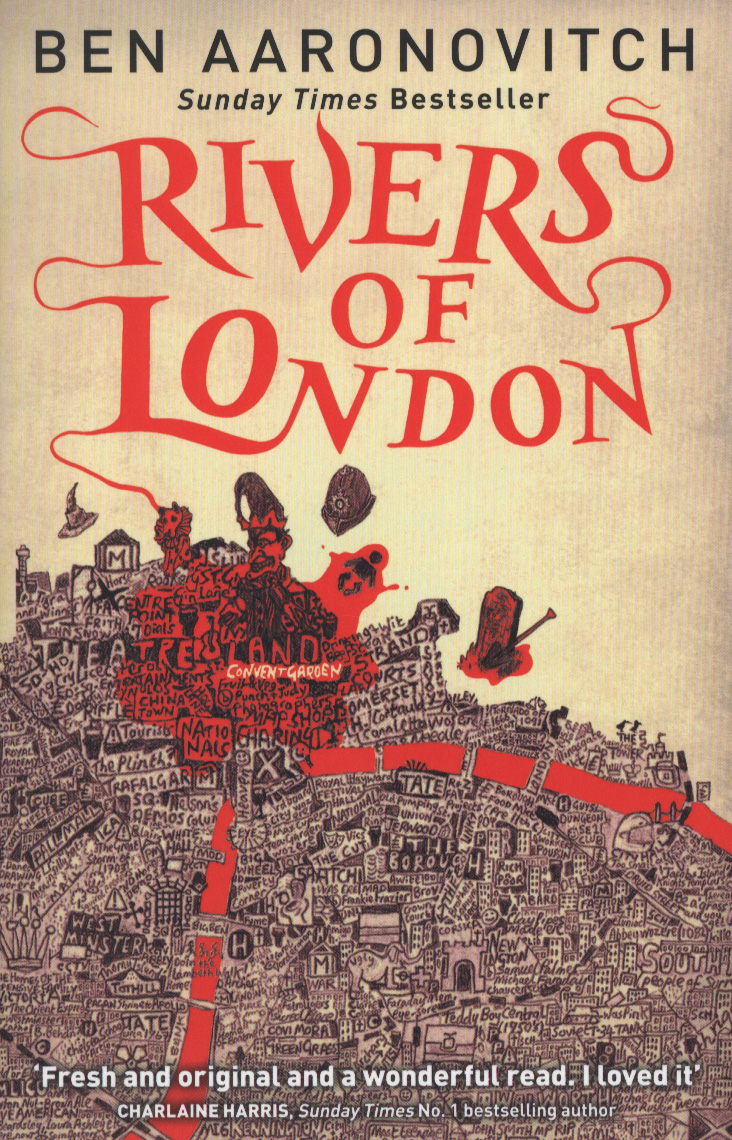
Okay, considering that I thoroughly enjoy The Dresden Files, I suppose it shouldn’t come as a shock that I enjoyed Rivers of London by Ben Aaronovitch. Another first person urban fantasy, magical detective novel, but this time set in London. For anyone reading in American it’s possible that you’ve seen it under the guise of the title: Midnight Riot. (As a side note, I personally much prefer the British cover for Rivers of London, for some reason the Midnight Riot just strikes me as the kind of cover you’d find on a children’s magic spy novel. But maybe that’s just me!)

I mean, take a look at it. It's a superb cover


The story follows Peter Grant, a probationary constable as he finishes his two year probationary period and as he deftly avoids becoming a member of the Case Progression Unit (to quote Aaronovitch “we do paperwork so real coppers don’t have to”) ends up being apprenticed to Detective Chief Inspector Thomas Nightingale, the only wizard in Britain.


I think I got an extra dimension of enjoyment out of this book because I work in London. So whenever there was mention of somewhere I recognised, have walked past, or even the tube line I got a little thrill of excitement (it’s silly I know). And also because it seems to have some nice self-deprecating humour in it, and what good British citizen doesn’t enjoy some of that?


Anyway, I know you’re here for one reason and one reason only, you dirty scoundrels, for a book review! So let’s get to it!

Firstly, I want to talk about what stood out to me for this book, and that’s the writing style. It’s a first person narrative and isn’t overly verbose, if anything it’s the opposite. Slightly jarring at first, Aaronovitch’s writing style doesn’t dwell on every little detail, it doesn’t take the reader by the hand and guide them through the story with exquisite detail and imagery. The writing style is closer to what you would get if someone were actually telling you a story. I would like to say now, this is definitely not a bad thing and very well suited to the character and the story, it just took a little getting used to.


What I mean by that is that occasionally you’ll read sentences or paragraphs that skip over a sizeable chunk of time filled with activity. In a lot of books the reader might feel that this is cheating them of the narrative, but I think that in this particular book Aaronovitch has used this technique in a rather dashing fashion. But why? Because being a police officer often isn’t fun, isn’t adventurous and is in fact rather dull. Of course I don’t want to belittle what people involved in law enforcement do in any way, but it’s just not the sort of thing you want to read about in a story. So instead of reading laborious passages in which Peter Grant, the main character, sifts through CCTV footage or logs in to computer systems or what have you, Aaronovitch just gives us what we need to know. We don’t need to know what video files he was looking at, or which folder he delved into, but we find out what he did and what he found.


As well as this, Aaronovitch scatters his writing with humour and it all comes off in a deliciously wicked way. There are definitely chuckles to be had along the way as we follow our main character through London, the underground and dealing with supernatural creatures of one sort or another. Aaronovitch, I think, manages to capture something of British humour, the kind of thing that makes you give everyone a wide, cautious berth whilst simultaneously having a sense of fierce camaraderie.


The London that we find ourselves exploring along with Peter Grant is a fascinating mix of almost forgotten London mythology along with the exciting or humdrum life of mundane London (and by mundane here I don’t mean boring, it’s definitely not boring, just not magic). But within Rivers of London we only really get a glimpse of the magical London that Aaronovitch has created. On the rounds with Nightingale, through Peter Grant’s eyes we see ghosts, trolls and other magical beings that can’t be cleanly categorised. And with Peter Grant’s feet firmly planted within both the magical and the mundane world by the end of the novel, I most certainly look forward to seeing how London transforms itself in the coming books.


Conflict is key to most stories, and Rivers of London is no different. We are thrown straight in with it as the story begins with Peter Grant as he looks after a particularly grisly crime scene when all the other coppers have left. And then almost before anything else has a chance to happen, Peter Grant is whisked away under the wing of Inspector Nightingale to embrace the strange and uphold the peace. Aaronovitch keeps the story rolling and definitely picks up the pace as the story comes to its conclusion.


Overall, I would say that Rivers of London is a thoroughly amusing and enjoyable read with a little adventure, lots of suspense and plenty of action. Although the writing style can jar a couple of times in the first few chapters it quickly and easily facilitates the story and is an apt style to portray British ambivalence in all its forms. Of course due to the first person perspective there is a lack of overt dealings with the other character’s motives, but Aaronovitch is skilled enough to throw us hints via body language and Peter Grant is clever enough to suss out how people are feeling.


You will immediately be drawn into this story as the strange and supernatural immediately jump out from the page and draw you to the next chapter. The pace is always increasing as storylines intertwine, jump free and twist and turn all over place. I would strongly recommend this book as it is a thoroughly enjoyable read with unique story and a witty approach. 

So that's it for now scribblers! I hope you enjoyed this review, and we'll be back with some more excellent content soon! I know that the blog has been review heavy of late so hopefully is the next week or two we'll be back to giving you a mix of tips, reviews and other thoughts!

In the meantime; good hunting!
Continue Reading...

Friday, 21 June 2013

The Mathematics Of Magic

So how do you explain magic? Well that’s just it, isn’t it? It’s magic, it is the unexplainable, the fantastic and the absurd. But more and more magic is becoming a quantifiable thing within fiction as more heavily imposing ‘magic systems’ are written into fiction. Don’t get me wrong, I love a good magic system, but surely there’s also a point where you have to say “well, it’s magic.” So this article is going to be about the pros and cons of having a magic system.


One of the first pros for a magic system (and vice versa that this is a con for non-regulated magic) is that it stops the characters from using magic as a get out of jail free card. The reason that I say this is that without explaining how magic works to the reader, or at least showing the reader what magic can do and what it can’t do (after all, the rule is show don’t tell!), you can use it to do anything.


A nice simple example of this is where you pull the energy for magic from. If it’s not defined then it can leave the reader in suspense and make it a lot easier to surprise the reader, but that also runs the risk that the character can always stay one step ahead and away from danger.


Take for example a magic system that define (very loosely) where magic gets its energy from. In Steven Erikson’s Malazan series the magical realms called ‘warrens’ are the source of magic and a wizard can draw on them to perform magical feats. But the more you ‘open’ your warren and the longer you hold it open for the more strain it puts on the wizards. So this sets a limit on the wizard’s use of magic as to how much of a magical battering they can take. 


Similarly when we look at Brandon Sanderson’s Mistborn series magical abilities are gained by ‘burning’ certain metals. Different metals produce different effects and you’re still subject to the laws of physics. So you can’t just stand on one leg and use magic to push a house down. That house is heavy and isn’t going anywhere, you’re going in the opposite direction.


So by having a system in place whereby you can see the limits of the use of magic it means that you can’t (without having a gaping maw of a plot hole) just use magic willy-nilly to save the day. So for Malazan you can’t just keep your warren open for as long as you want to do whatever you need, you’ll get torn apart. And for Mistborn, if you run out of metal then you’re just a normal person.


Check out the artist here: http://www.threadless.com/threadless/magic-bacon/
I was seriously surprised this picture existed.
Of course there is some expectation that something will swoop down and save the day (whether you want to live up to that or not is up to you!) but this will stop you from releasing the tension with: “And with a magical WHOOSH the enemy were all turned into dandelions and our heroes were swept away on a magic carpet made of bacon to forever romp in fields of butterscotch and quaff ambrosian wine! Huzzah!” 

Okay so maybe that’s an extreme example, but you get the idea. A tangible limit to magical forces, or how magical practitioners can use those forces restricts how much they can use it as a ‘get out of jail free’ card. This doesn’t mean you can’t push those forces, and push your characters to help them get out of those situations,  but it does mean that you then have a measurable cost for that push.


Another pro along the same line as this one is that a defined magic system that is known to the reader, if used correctly, can be used to build tension in the story. For example, if you have a magic user who finds themselves behind enemy lines and vulnerable but there’s something that the readers know will negate their magic, the story becomes a lot more tense as the readers wonder how the magician will get out of their hairy situation.


However, there are cons that come with a defined magic system of course. It can be easy to get carried away in the costing of powers and place too many limitations on your magic system. Why is this such a bad thing you ask? Well, ultimately because it’s magic! Magic is supposed to need our suspension of disbelief and not have us taking a pencil and paper to try and figure out how it was done. I believe that that sense of mystery and the fantastical is part of what makes the fantasy genre so compelling. Part of that universe is something that you can’t be explained, it can be utilized and you might understand it, but it can’t be explained away and made mundane. 


I think that whether or not you want to have an in-depth system for using magic ultimately comes down to how deeply you want magic to be used by your main characters in your books. If your protagonist is a heavy magic user then it probably won’t do to have magic as a completely unexplained phenomenon in your world. That’s why the young protagonist slowly learning along with the reader is a popular model. It develops the character and explains how the universe works at the same time.


But then if you would prefer your magic users on the border, as secondary or tertiary characters then the magical forces do not need to be well defined. It could even contribute to the plot, as the protagonist desperately tries to understand these forces that are being thrown around in a manner generally detrimental to physical health. By having magic without borders, magic is left as a mystical force in the universe. Something barely understood but that is entwined with the forces of life, creation, death and destruction.


I hope that you enjoyed this blog post, and that all you wordsmiths out there are forging prose with great grace and ease!


If you have any questions don’t hesitate to send me an email at: thetemperedpen@gmail.com or take a look over at the facebook page and write a comment.


Good hunting!


Magic Bacon Image (C) Wandering Bert: Check it out here - http://www.threadless.com/threadless/magic-bacon/
Continue Reading...

Followers

Follow The Author